Construction and Renovation Site Waste Clearance in Bristol: Costs and Compliance
Construction is the waste heavyweight of the UK economy - it produces around 62% of the country's total waste, roughly 137 million tonnes a year, more than every household in the country combined. A live build or a running renovation in Bristol throws off a steady stream of it: broken brick, plasterboard offcuts, packaging, dug-out soil and mixed strip-out debris, week after week rather than in one tidy pile. On a busy site that can mean a full skip every few days, and mixed rubble alone weighs 1.2 - 1.5 tonnes per cubic metre. Bristol's older housing stock - over 30% of homes predate 1919 - keeps trades busy, but tight terraced streets and Residents' Parking Zones make clearing the waste awkward and easy to get wrong. This guide covers what ongoing site waste clearance costs in Bristol in 2026, how muck-away and segregation change the bill, and the compliance side that catches contractors out.
What Site Waste Clearance Actually Covers
Site waste clearance is a different animal to a one-off house clearance. On a running job the waste is generated continuously, it is dense, and it is mixed - inert rubble one day, timber and packaging the next, plasterboard and insulation after that. The clearance has to keep pace with the build rather than mop up at the end, which is why most contractors want either scheduled collections or a container swapped out on a cycle. Around 80 - 90% of what comes off a typical strip-out and rebuild is recoverable if it is handled properly, so the job is as much about sorting as shifting.

If you are running a project across Bristol and need waste gone on a schedule that suits the trades rather than the tip's opening hours, B's Waste Removal handles ongoing site clearance across the city - staged collections, muck-away, and single loads timed around your programme.
The practical split is between light mixed waste (packaging, timber, offcuts, general strip-out) and heavy inert waste (rubble, concrete, soil, tiles). They are priced differently because they are disposed of differently, and mixing them on the same load usually costs more, not less. Keeping the two streams apart on site is the single biggest lever a contractor has over the final bill.
What Construction Site Waste Clearance Costs in Bristol
Man-and-van site clearance in Bristol is priced by volume and weight combined, and in 2026 it broadly runs like this: a quarter-van light load is around £90 - £150, a half-van mixed load £160 - £250, and a full van of roughly 10 - 12 cubic yards £280 - £420. Those figures assume light-to-medium waste. The moment a load goes heavy with rubble or soil, the price is driven by weight, not the space it takes up.
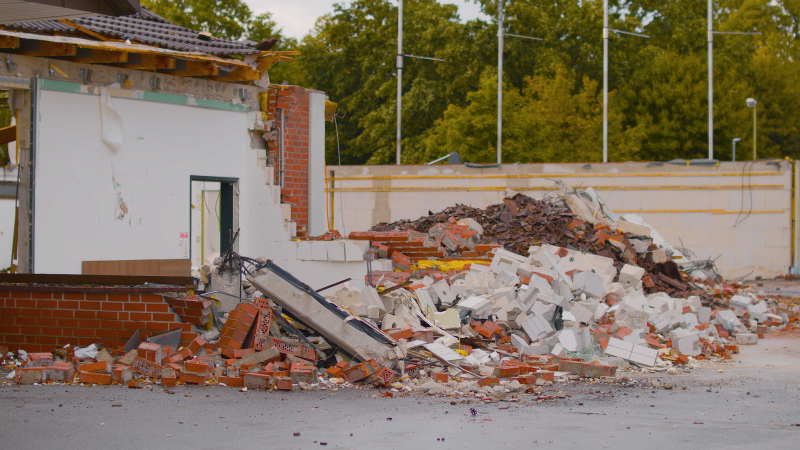
Heavy materials are usually charged per tonne or per sack on top of the base rate - expect £2 - £4 per rubble sack, or £80 - £150 per tonne for mixed inert waste tipped loose. Plasterboard is nearly always charged separately, around £10 - £25 per sheet-equivalent, because gypsum cannot legally be landfilled with general waste - it produces toxic hydrogen sulphide gas when it breaks down wet, so it has to be kept apart and sent to a dedicated recycler.
Muck-Away and Heavy Loads
Muck-away - the removal of excavated soil, hardcore and rubble - is its own line on the budget. A grab lorry carries roughly 12 - 16 tonnes and typically costs £180 - £320 a load in and around Bristol depending on the material and how far the tip is. Clean, uncontaminated soil and hardcore is far cheaper to move than muck laced with plastic, timber or old tarmac, because clean inert waste can go to a recycling or restoration site while contaminated loads attract landfill tax, now above £126 per tonne. On a dig-out for an extension or basement in a hilly area like Totterdown or Cotham, access for a grab or tipper is often the deciding cost factor, not the volume itself.
Segregating Waste on Site Saves Real Money
Segregation is where a switched-on contractor claws back the most cost. When rubble, timber, metal, plasterboard and clean packaging are separated at source, each stream goes to the cheapest correct outlet - inert to recycling, metal to scrap, plasterboard to a gypsum recycler - instead of the whole lot being charged as expensive mixed waste. A well-segregated site can cut disposal costs by 20 - 40% compared with one skip taking everything.

It is also a legal habit worth building. Waste has to be described and coded correctly when it is handed over, and the government's guidance on how to classify different types of waste sets out the European Waste Catalogue codes that a proper waste transfer note relies on. Getting the description right is not box-ticking - it determines where the waste can legally go and protects you if anything is ever queried.
Space is the usual objection on a tight Bristol plot, and it is fair - a terraced job in Bedminster may have nowhere to stand three separate containers. Even then, keeping just plasterboard and clean rubble out of the general skip captures most of the saving, because those are the two streams that cost the most when they contaminate a mixed load.
Access, Skips and Parking on Bristol Sites
Bristol's geography makes site logistics harder than the national average. Steep streets in Kingsdown, Windmill Hill and St Andrews, narrow Victorian terraces with no rear access, and wide Residents' Parking Zones across the inner city all shape how waste can physically leave a site. If a skip or grab lorry cannot get near the work, the waste is carried further by hand, and labour is where the hours - and the pounds - add up.
Skips on the public highway need a permit from the council. In Bristol a skip permit is arranged through Bristol City Council and generally costs in the region of £30 - £60 for the licence, on top of the skip itself, with the skip needing lights and markings if it sits on the road overnight. The council's bins, recycling and waste pages are the starting point for the current rules. In an RPZ you may also lose resident bays for the duration, and a Penalty Charge Notice for getting parking wrong is £70, halved to £35 if paid within 14 days - so a poorly-placed skip or van can quietly add cost to a job.
For short, sharp jobs a man-and-van collection often beats a skip on both cost and hassle, because there is no permit, no fortnight of the neighbours topping it up for free, and the waste is gone the same day. For a long build generating waste over weeks, a container that gets swapped out usually wins.
Your Duty of Care as a Contractor
Here is the part that turns a cheap quote into an expensive mistake. Anyone who produces or handles construction waste carries a legal duty of care that does not end when the load leaves the site. Under the government's guidance on managing your business waste, you must store it safely, only pass it to an authorised carrier, and complete a waste transfer note describing exactly what was moved - kept on file for at least two years.

The single most important check takes under a minute: confirm your carrier is licensed. Every firm moving waste for money must be a registered waste carrier, and you can verify any company for free on the Environment Agency's public register of waste carriers, brokers and dealers. A legitimate operator hands over a waste transfer note without being asked and is happy to show its licence number. If a carrier gets vague about paperwork, that is your cue to walk.
Skipping any of this is not a small risk. If waste from your site is dumped by an unlicensed carrier and traced back to you, the liability can land on you as the producer - not just the person who tipped it. On a commercial job, that can mean an unlimited fine on conviction, and it is entirely avoidable with a two-minute check and a note kept on file.
Fly-Tipping: Why a Cheap Carrier Is a False Economy
Fly-tipping is a national problem and construction waste is a big slice of it. Councils in England dealt with over 1.1 million fly-tipping incidents in a recent single year, and a meaningful share was construction, demolition and excavation waste - exactly the material that comes off a building site. A suspiciously cheap "we'll take the lot for cash" quote often works precisely because the operator has no intention of paying to tip it legally.

The enforcement has teeth. Fixed penalties for fly-tipping now reach £1,000, councils can issue penalties of up to £600 for duty of care failures, and serious cases carry unlimited fines and even prison. Bristol's lanes, the fringes of the Avon Gorge, and quiet spots out towards the ring road all see dumped building waste, and every load that is traced back costs the producer far more than a legitimate collection ever would. Paying a properly licensed carrier is cheaper than the alternative every single time.
How to Keep Site Waste Costs Down
The biggest savings are planned, not improvised. Segregate at source, book collections to match the build's rhythm rather than letting waste pile up and block access, and keep plasterboard and clean rubble out of the general skip. On most projects those three habits alone shave a fifth or more off the disposal budget.

A few smaller wins stack up too. Order materials to minimise offcuts and return unused stock where you can, crush and reuse clean hardcore on site if the design allows, and bundle heavy muck-away into full grab loads rather than part-loads that waste the lorry's capacity. If you are clearing at the end of a home renovation rather than running a trade site, the pricing and rules shift slightly, and we cover that side in our guide to builders' waste and renovation clearance in Bristol. Whichever type of job you are on, a clear waste plan and a licensed carrier are what keep the cost predictable and the paperwork clean.
---
FAQ
Q: How much does construction site waste clearance cost in Bristol?
A: In 2026, man-and-van site clearance in Bristol runs roughly £90 - £150 for a quarter-van light load, £160 - £250 for a half van, and £280 - £420 for a full van of mixed waste. Heavy inert waste is charged by weight instead - about £2 - £4 per rubble sack or £80 - £150 per tonne - and plasterboard is usually £10 - £25 per sheet-equivalent because it must be disposed of separately. Grab-lorry muck-away for soil and hardcore is typically £180 - £320 per load.
Q: Do I need a permit for a skip on a Bristol building site?
A: Yes, if the skip stands on the public highway. A skip permit is arranged through Bristol City Council and generally costs around £30 - £60 for the licence on top of the skip hire, and the skip must be lit and marked if it sits on the road overnight. A skip on your own private land or driveway does not need a permit. In a Residents' Parking Zone you may also lose resident bays while the skip is in place.
Q: What are my legal duties for construction waste as a contractor?
A: You carry a duty of care: store waste safely, only hand it to a registered waste carrier, and complete a waste transfer note describing the waste with the correct classification codes, kept on file for at least two years. Always check your carrier is licensed on the Environment Agency's public register before booking. If waste from your site is fly-tipped by an unlicensed carrier and traced back to you, the liability can fall on you as the producer, with fines up to £600 for duty of care failures and unlimited fines on conviction.
Q: How can I reduce site waste disposal costs?
A: Segregate waste at source so each stream goes to its cheapest correct outlet - a well-segregated site can cut disposal costs by 20 - 40% versus one mixed skip. Keep plasterboard and clean rubble out of the general skip, book collections to match the build's pace so waste never blocks access, and bundle heavy muck-away into full grab loads rather than part-loads. Reusing clean crushed hardcore on site where the design allows saves both disposal and delivery costs.
---
Ready to work with B's Waste Removal?
Let's connect! We’re here to help.
Send us a message and we’ll be in touch.
Or give us a call today at 111-222-3333
Agency Contact Form
More Marketing Tips, Tricks & Tools
B's Waste Removal